Common Causes of Septic System Problems in Rural Colorado
Quick Answer: Rural septic systems in Colorado run into trouble for a handful of recurring reasons: pumping that got put off for too many years, more water going into the system than it was ever sized to absorb, roots and aging pipe finding their way into the lines, and the shallow, rocky ground that much of the Grand Valley and western Colorado sits on, which leaves the soil less room to finish treating effluent than it would have almost anywhere else. Cold winters and a property that gets driven over or built on without anyone marking where the drainfield sits add two more ways a system can fail even when nothing looks obviously wrong on the surface. None of these causes act alone very often. A tank that has gone a decade without pumping, sitting in thin soil over rock, is a very different repair than a two-year-old system on the same lot, and figuring out which of these is actually driving the problem is what determines whether a fix holds.
A septic system does not ask for much attention, which is exactly why it is easy to stop thinking about. It sits underground, quietly separating solids from wastewater and letting the soil finish the job, until a drain starts running slow or a patch of yard stays wet and green longer than everything around it. At that point the question that actually matters is not just that something is wrong, but which of a fairly short list of causes is behind it.
On rural land around Palisade, Grand Junction, Fruita, and the rest of the Grand Valley, that list looks a little different than it would in a subdivision with deep, uniform soil and a municipal sewer line a few lots over. The causes below cover the ones that show up again and again on properties out here, in roughly the order that tends to matter, starting with the one almost every failing system has in common.
The Grand Valley Adds Its Own Complications to the Usual List
Every septic system anywhere depends on the same basic sequence working correctly: wastewater settles in the tank, the clarified liquid moves out to a drainfield, and the soil beneath that field finishes treating it before it reaches groundwater. Most septic troubleshooting guides describe causes that apply everywhere, aging components, skipped maintenance, too much water.
What is different on a rural property between Palisade and Delta is the ground itself. Much of this valley sits on old river benches with shallow soil over sandstone, shale, or a hard clay layer, and a lot of the land was developed for orchards and irrigation long before it was built out with houses. That combination, older infrastructure, water-intensive land use nearby, and thin soil, means the same mistake, say, running the sprinklers too close to the drainfield, can cause a much faster failure here than it would on a property with fifteen feet of well-drained loam. Keeping that in mind makes the rest of this list easier to apply to an actual property rather than reading it as generic advice.
Maintenance That Never Made It Onto a Calendar
The single most preventable cause of septic failure is also the most common one, and it is not complicated. A tank has to be pumped on a regular schedule, and a system that goes ten or fifteen years without service is carrying a lot more risk than the property owner usually realizes.
Skipped Pumping Lets Solids Reach the Drainfield
A septic tank separates solids and scum from liquid before wastewater reaches the drainfield. When the tank becomes too full, solids can escape with effluent, clogging soil pores. Regular pumping helps protect the drainfield, while delayed pumping can cause damage that later pumping cannot reverse.
Effluent Filters Nobody Knew Were There
Many newer septic tanks have effluent filters that catch smaller solids before they leave the tank. However, clogged filters can restrict flow and cause wastewater backups. If pumping or filter maintenance is undocumented, checking both should come before assuming the drainfield has failed.
Water Use Patterns That Outpace What the System Was Built to Handle
Every septic system is designed around an expected daily flow based on the size of the house and the number of bedrooms. Pushing well past that number, even gradually, is one of the more common ways an otherwise sound system runs into trouble.
Extra household members, a new appliance, or a fixture that leaks quietly can all add gallons the original design never accounted for. On rural Grand Valley properties, outside water sources matter just as much. A lot of land here was set up for orchard or garden irrigation long before a house went in, and flood irrigation, ditch water, or a sprinkler zone that runs close to or over the drainfield can saturate the same soil the system depends on to absorb effluent. A property near Palisade with a few rows of fruit trees or a vineyard block close to the house is a common setup, and if nobody ever mapped exactly where the irrigation lines cross relative to the drainfield, it is easy for that watering schedule to be working directly against the septic system without anyone connecting the two.
Tip: Before assuming a slow drainfield is failing on its own, check whether any irrigation, ditch water, gutters, or downspouts are draining anywhere near it. Redirecting that water elsewhere on the property costs little and can rule out one of the simplest overload causes before assuming the field itself needs to be replaced.
Guests staying for an extended visit, an RV parked on the property with its holding tank dumped into the house system, or a household that runs laundry and dishwasher loads back to back rather than spacing them out can all create the same kind of short-term overload. None of these is a problem by itself. The issue is a system that is already running close to its design capacity getting pushed over the edge by one more source of water it was never built to absorb.
What Is Actually Growing and Corroding Underground
Roots and old pipe materials cause a slower kind of failure than an overload does, which is part of why they tend to go unnoticed for years. Tree and shrub roots grow toward moisture, and a septic line carries exactly that. Once a root finds a hairline crack or a loose joint, it does not stay small. Left alone, roots can block flow outright, and given enough time, can physically crack pipe or tank components as they thicken.
Pipe material matters here too. Systems installed decades ago sometimes used clay or thin-walled pipe that is far more vulnerable to root intrusion and joint failure than the PVC used in modern installations. A rural property with an older system and mature trees or windbreak rows planted near the drainfield, common on land that has been in a family for a generation or more, is a setup where this kind of slow damage is more likely than not to be happening somewhere underground, even before any symptom shows up in the house.
Shallow, Rocky Soil Across the Benches
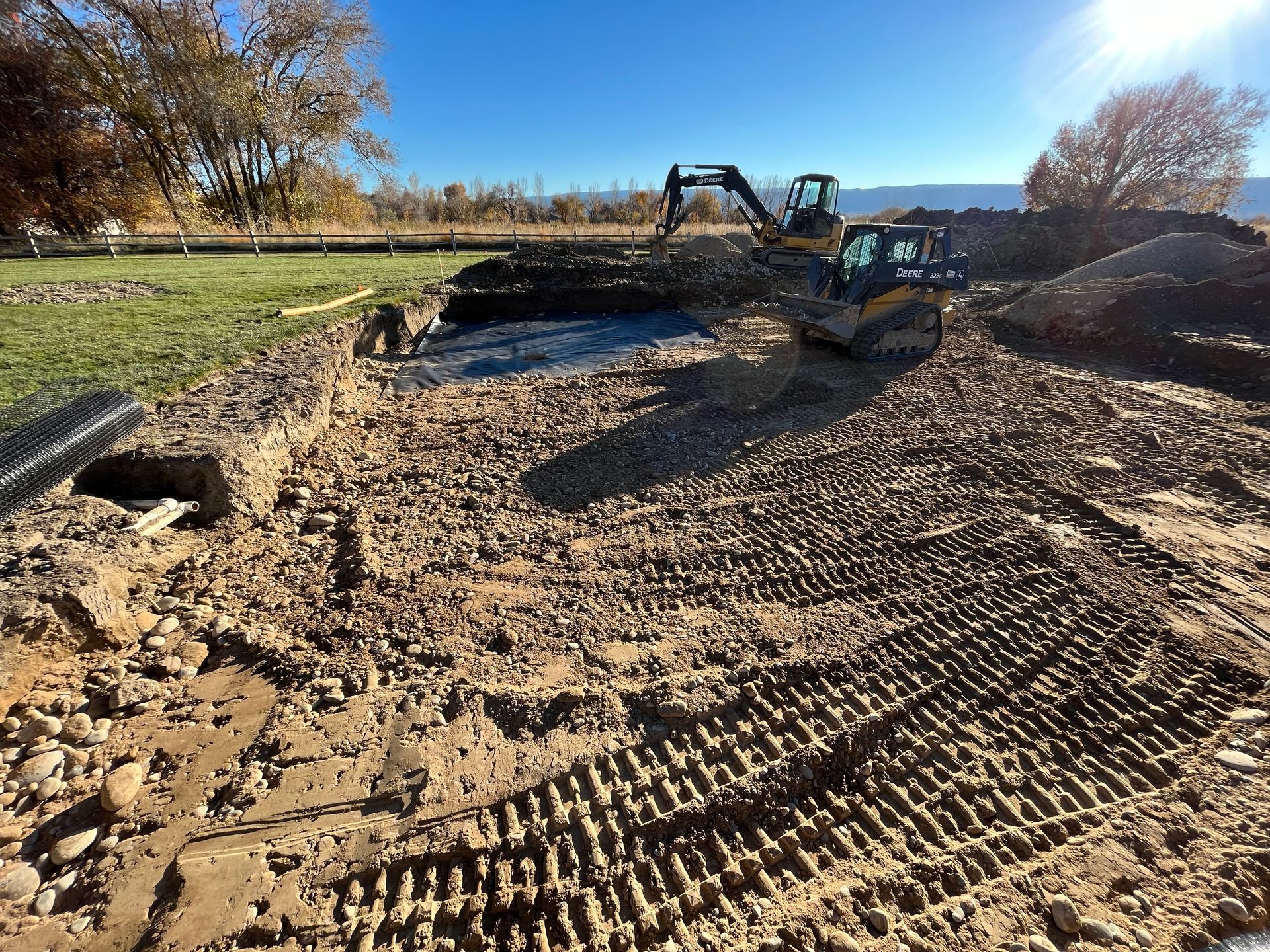
This is the cause that separates septic trouble here from septic trouble almost anywhere with deeper, more uniform ground. A drainfield only works if there is enough unsaturated soil between the trench bottom and whatever sits underneath it, whether that is groundwater or a restrictive layer like sandstone, shale, or a dense clay hardpan. Colorado's onsite wastewater treatment regulations exist specifically because soil conditions vary so much across the state, and they require site-specific evaluation rather than a one-size design, with different standards for the kind of shallow or restrictive soils common on the benches around Grand Junction, Fruita, and Palisade.
A system that would comfortably handle a heavy week of water use in deep, well-drained soil somewhere in the eastern part of the state can reach its limit much faster on a Grand Valley bench lot, simply because there is less soil column doing the filtering work. This is not a flaw in the system. It is a mismatch between an older or generic drainfield design and the ground it actually sits in, and it is one of the more common underlying reasons a system here struggles even when the tank itself is in good shape and pumping is up to date.
Warning: Do not assume a drainfield problem on rocky, shallow ground is a maintenance issue and treat it with pumping alone. A soil-depth or restrictive-layer problem that gets treated like an overdue service call tends to come back again and again, and the money spent on repeated pumping and cleanout visits usually adds up to more than a proper site evaluation and, if needed, a redesign suited to the actual ground would have cost the first time.
Damage From Vehicles, Equipment, and Building Projects
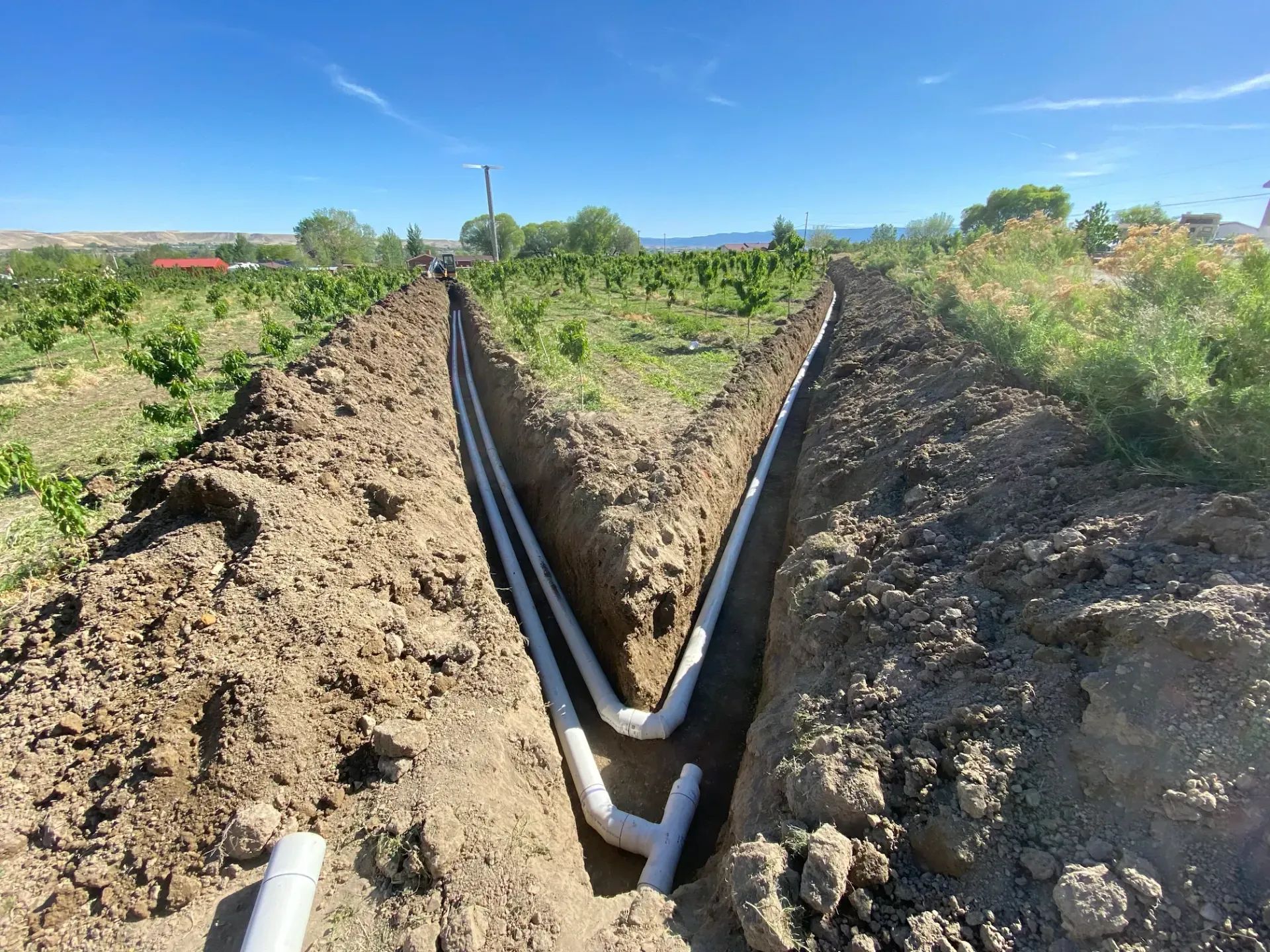
A drainfield is buried a few feet down, which makes it easy to forget is there until something goes wrong. Parking a vehicle, trailer, or piece of heavy equipment over it compacts the soil above the trenches and can crush the pipe directly underneath. On rural land where the field often sits in what looks like ordinary open ground, with no fence or marker showing where it is, a contractor's equipment during an unrelated project, a delivery truck, or even routine ranch or farm traffic can cross it without anyone realizing what is underground.
Compaction causes damage even without a crushed pipe, because it reduces the soil's ability to let air and water move through the way the drainfield design assumes. A field that gets driven over repeatedly loses absorption capacity gradually, often with no visible surface sign until the system is already struggling. Adding an outbuilding, a driveway extension, or a new patio near the drainfield without first confirming exactly where the field boundaries are is a common way this kind of damage gets introduced on a property that had no septic problems the year before.
A System That Was Never Matched to the Household It Serves
Some septic trouble traces back to a decision made before the system was ever installed. A drainfield sized for a smaller household than the one currently living there, a system extended informally over the years to cover an added bedroom or a guest structure without ever being re-evaluated, or a design that assumed better soil than what the excavator actually found when the trenches went in can all set a system up to struggle, independent of age or maintenance.
This cause is the hardest for a property owner to diagnose without help, because the symptoms, slow drains, a field that stays saturated, backups that come and go, look similar to several of the other causes on this list. Sorting it out usually means tracing the system back to its original design, comparing that against the household and the site as they exist today, and figuring out whether the mismatch is in the sizing, the layout, or the ground itself.
Frequently Asked Questions
How can I tell if my septic problem is a maintenance issue or a soil issue?
Systems unpumped for years suggest maintenance problems. Regular pumping with ongoing failures on shallow ground points toward soil issues. Review maintenance history and evaluate soil depth to distinguish causes, since surface symptoms can look identical.
Does irrigation or ditch water near my house actually affect my septic system?
Yes. Saturated soil prevents drainfield treatment. Drainfields require unsaturated soil to absorb and treat effluent. Irrigation, ditches, or sprinklers running nearby reduce field capacity. This is common because Grand Valley properties were developed for orchard irrigation before residential housing.
Is it normal for an older rural septic system to still be working fine after decades?
It happens but rarely. Shallow, rocky soil in this area tends to shorten system lifespan compared to deeper ground. Systems working well after decades have maintenance records and soil conditions better than typical bench properties.
Can a septic system fail even if the tank was just pumped?
Yes. Pumping removes solids but doesn't undo drainfield damage, repair cracked pipes from root intrusion, resolve hydraulic overloads, or change unsaturated soil depth beneath the field. Pumping rules out one issue without ruling out others.
What is the first thing I should check if I suspect a septic problem?
Check water use and anything draining near the drainfield first; these are easiest to modify. Next, examine maintenance history and tank condition to determine if your problem is mechanical, hydraulic, or involves site soil conditions.
Septic Problems Need the Right Diagnosis First
Septic trouble on rural Colorado ground is rarely one single cause. It is usually a combination: a maintenance gap meeting shallow soil, or an irrigation habit adding just enough water to push an aging drainfield past capacity. The repair that actually holds depends on knowing which of these factors is doing real damage. A system that went a decade without pumping, sitting in thin soil over rock, is different from a two-year-old system on the same lot, and identifying which one you have determines whether the fix holds or fails again within months.
The shallow, rocky soil on Grand Valley bench lots means
septic systems
here follow different patterns than generic advice suggests. Wiseland Construction & Excavation
has spent 15
years across Mesa County, CO, tracing problems back through the tank, the lines, the drainfield, and the soil beneath, working from what the ground actually demands rather than applying standard fixes. The costs of treating symptoms without addressing the real cause compound quickly, and many property owners find themselves paying for the same repair multiple times before the actual problem gets identified and fixed for good.