Why Professional Land Clearing Matters Before New Construction
Quick Answer: Professional land clearing matters because everything built afterward sits on what the clearing crew leaves behind. Removing brush, stumps, and roots, stripping organic topsoil, and protecting the trees you want to keep gives grading, utilities, and foundations a clean, stable starting surface. Done well, it also sets drainage and erosion control before the ground is disturbed. Done badly, buried roots rot, fill settles, and the problems show up after the house is finished.
You have a lot picked out, a set of plans in hand, and a builder asking when the site will be ready. From the road it looks ready enough. The sagebrush is only knee high, there are a few overgrown shrubs along the fence line, and a couple of old trees stand where the garage is supposed to go. It feels like something a rented skid steer and a long weekend could handle.
That is the moment most new construction projects either start well or quietly start a problem. Land clearing is the first physical step on the ground, and it decides what every later crew inherits. The grader, the utility trencher, the concrete crew, and the framer all depend on a surface that was prepared properly before they arrived.
Across the Grand Valley and the high desert around it, clearing has its own quirks. Brush can be dense and woody, roots run deep in search of water, and rock and cobble sit close below the surface. Summer storms can send a sheet of runoff across bare ground in minutes. Understanding why clearing deserves professional attention helps you plan the whole build with fewer surprises.
What Land Clearing Actually Includes
People often use the phrase to mean cutting down whatever is in the way. In practice, clearing is a sequence of separate tasks, and each one protects something about the build that comes later.
It begins with a site assessment, walking the parcel to mark the building footprint, the access route, the utility paths, and anything that has to stay. Then comes brush removal, felling of trees that are in the way, and removal of stumps and larger roots. After that, the organic layer is stripped and set aside, and the cleared material is hauled off or processed. On many sites the last step is a first pass of shaping so water has somewhere sensible to go.
Treating all of this as one job, planned by someone who knows what comes next, is the main difference between professional clearing and a weekend of cutting. The crew is not just removing plants. They are preparing a surface that other trades will measure against.
Why Roots and Stumps Cannot Be Left Behind
A stump or a mass of roots left under a future building pad is one of the more common causes of settlement. Wood and root material breaks down over time, and as it decomposes it leaves voids. Soil above those voids slowly drops, and a slab or footing resting on it drops with it.
Specifications for clearing work commonly call for stumps, roots, and debris to be removed completely, with larger roots taken out and the resulting holes refilled in thin, compacted layers so the repaired spot matches the density of the ground around it. That last detail is the part owners overlook. Pulling a stump is easy. Filling the hole so it behaves like the surrounding soil takes proper material and proper compaction.
In western Colorado, shrubs and trees that look small on top can have root systems that reach well beyond their canopy. Pulling them with the right equipment, instead of cutting them at the surface, keeps those roots from resprouting and from leaving organic pockets under your new driveway or foundation.
Tip: Before any equipment arrives, walk the lot with your builder and mark every tree you want to keep with flagging tape. Trees close to the building footprint often need protection zones around their roots, and it is far easier to plan around them on day one than to try to save one after the crew has already driven over its roots.
Stripping Topsoil the Right Way
Topsoil is full of organic matter, which is wonderful for a garden and a poor foundation for anything heavy. If a pad, driveway, or slab is built over it, the organic material compresses and breaks down unevenly. The usual practice on construction sites is to strip it from the building area and keep it separate from the subsoil underneath.
Keeping those layers apart matters for two reasons. First, mixing topsoil into fill weakens the fill. Second, the stripped topsoil is worth saving. Stockpiled away from excavation edges, shaped so water drains off it, and covered against wind, it can be spread back around the finished home to support a yard or landscaping.
High desert topsoil is often thin, so there is not much of it to waste. A careful clearing crew protects what exists instead of scattering it across the lot or burying it under fill where it does no good.
Setting Up Drainage and Erosion Control Early
Once vegetation is gone, bare ground is at its most vulnerable. Plant roots that held the surface together are removed, and the first heavy summer storm can cut channels across a lot that sat quietly for decades. Sediment then ends up in a neighbor's yard, a roadside ditch, or an irrigation lateral.
For that reason, good practice puts erosion and sediment controls in place before clearing disturbs the surface, then maintains them until permanent vegetation takes hold. Clearing also gives the contractor a chance to read the lot honestly. With the brush gone you can see the natural low spots, the old runoff paths, and the places where water collects, and you can plan grading and drainage to work with them.
Retention areas, swales, and graded slopes are much easier to shape on a freshly cleared site than on one that has already been built around. Planning them at the clearing stage means the drainage works from the first rain instead of being patched in after something goes wrong.
Keeping Utilities and Access in Mind
A cleared lot is not just empty. It has a road or driveway that has to reach the building area, and it often has buried lines that nobody has thought about in years. Before heavy equipment disturbs the ground, existing utilities need to be located and marked, and any that are being removed need to be properly disconnected and capped.
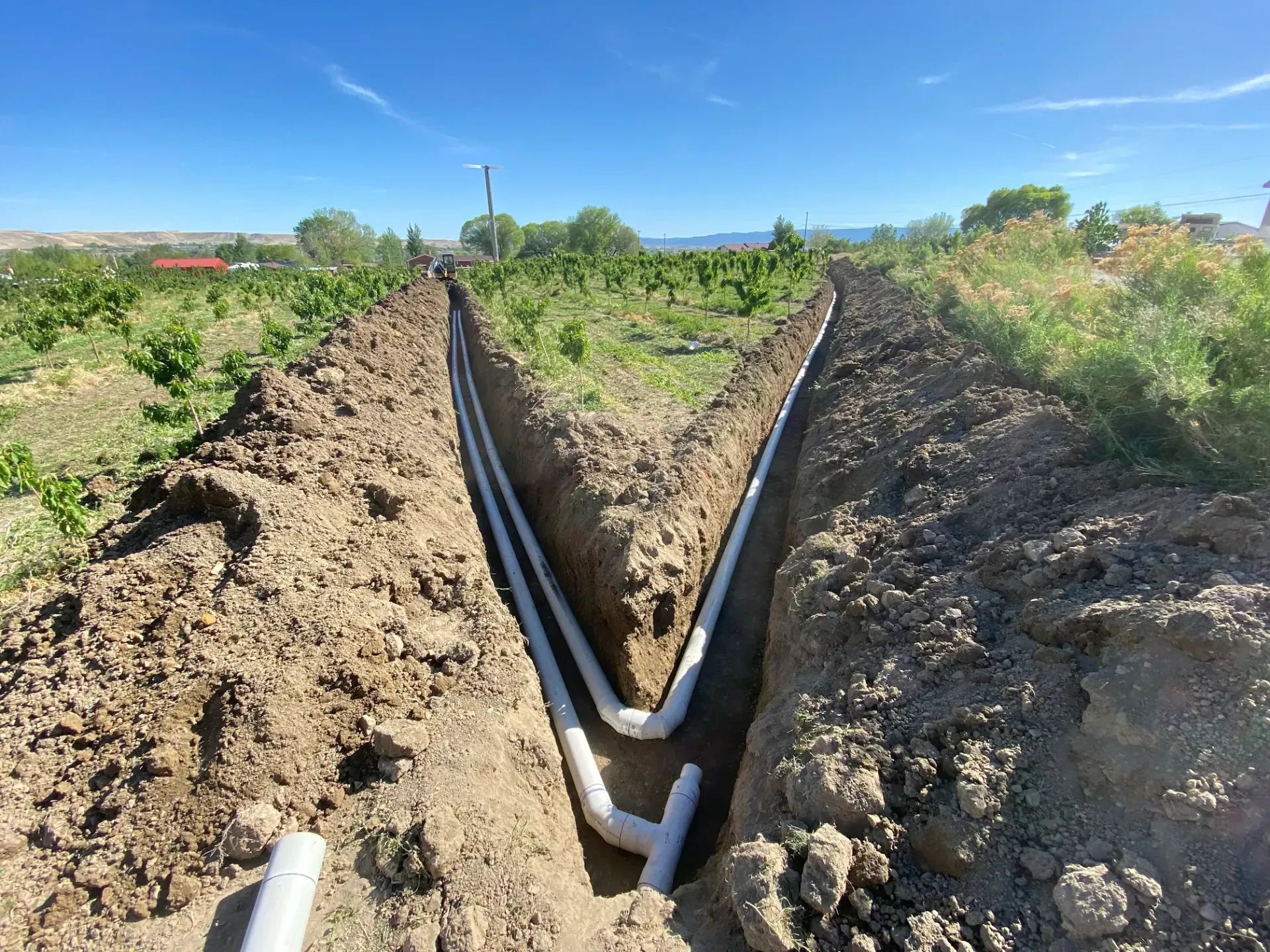
Clearing also opens the corridors where new water, sewer, gas, and electric lines will run. A crew that knows the utility layout can clear those paths at the right width and leave them free of stumps and large roots, which makes trenching faster and reduces the risk of a pipe settling into soft organic material later.
Warning: Never start clearing near the home site until buried lines have been located and marked. Pulling a stump or running a blade through the ground without that information can damage a water, gas, or electric line, and an unmarked line is a safety hazard for everyone on the site, not just an inconvenience.
How Clearing Affects Your Construction Schedule
Skipping or rushing clearing rarely saves time. It moves the work to a worse moment. A stump discovered during grading stops the grader. A buried root mass found during foundation excavation stops the concrete crew. Brush piles left on site get in the way of every trade that follows.
A properly cleared site lets the work run in order. Surveyors can stake the footprint without obstructions. Grading crews can set the pad elevation on a clean surface. Utility crews can open trenches without fighting roots. Builders can stage materials where they planned to. Each trade starts when it is supposed to, and none has to stop and wait for someone to deal with debris.
Weather matters here too. Western Colorado has a workable window between hard frost and heavy summer storms, and a site that is cleared and shaped early makes the best use of it.
Disposal, Fire Risk, and Leaving the Site Clean
Cleared material has to go somewhere. Brush, wood, and roots can be hauled off, chipped, or separated for recycling, depending on the site and the volume. Leaving large piles sitting around is a fire concern in dry country, and it is also a nuisance because piles shelter pests and block access.
Professional crews plan the haul route and the disposal method before cutting begins. Hauling is part of the job, not an afterthought, and a crew with its own trucks and equipment can keep material moving off the lot instead of stacking up around the building area.
What to Ask Before Clearing Starts
You do not need to run the clearing yourself, but a few questions will tell you whether the plan is sound. Ask how the building footprint, driveway, and utility paths will be marked. Ask what happens to stumps and roots, and how any holes will be filled. Ask whether topsoil will be stripped and stored, which trees will be protected, and how runoff will be handled while the ground is bare.
The answers show whether clearing is being treated as the first stage of the build or as a chore to get out of the way. A contractor who can answer clearly has usually thought about what comes after, and that is exactly the person you want standing between raw ground and your builder.
Frequently Asked Questions
Can I clear my own lot before hiring a builder?
You can remove light brush yourself, but stump and root removal, topsoil stripping, and hauling usually call for heavy equipment and a plan that matches the building layout. Clearing the wrong area, or clearing without marking utilities, can create more work later.
How do I know which trees should stay?
Trees that sit outside the building footprint, driveway, and utility paths are the best candidates to keep. Healthy, established trees add shade and value, but their roots need protection during construction, so decide with your contractor before the equipment arrives.
Why not just cut vegetation at ground level?
Roots left in the ground decay and leave voids, and many shrubs resprout from what remains. Under a slab, driveway, or footing, that can mean settling, cracking, and uneven surfaces that are difficult to correct once the structure is built.
What happens to the topsoil during clearing?
On a well run site, topsoil is stripped from the building area, kept separate from subsoil, stored away from excavation edges, and later spread around the finished home. That preserves a valuable layer and keeps it out of the structural fill.
Does clearing affect drainage on my property?
Yes. Removing vegetation exposes bare ground, which sheds water faster and erodes more easily. Planning erosion control and grading during clearing lets you direct runoff away from the building area before the first heavy storm arrives.
How long does professional land clearing take?
It depends on the size of the parcel, the density of brush and trees, the amount of rock close to the surface, and how much hauling is involved. A site assessment is the best way to get a realistic timeline for your lot.
Starting Your Build on Ground You Can Trust
Clearing is the least glamorous stage of a build, yet every later trade depends on it. When roots are removed, topsoil is stored properly, drainage is planned, and utility paths are marked, the project begins on a stable and predictable surface. Skipping that groundwork does not erase the problems, it only moves them to a moment when they cost more to fix. A clean, well prepared lot lets each crew start on schedule and keeps the finished home from settling later.
Wiseland Construction & Excavation
has served Mesa County, CO for 15
years, and its crews know how dense brush, deep roots, and shallow cobble behave across the high desert. Walking the parcel first, then clearing, shaping, and hauling with the next stage in mind, hands builders a site they can work on right away. Owners get a foundation that rests on solid, well prepared soil, and the whole project moves forward with fewer surprises.